The event industry changed faster in the last three years than it did in the previous ten.
Budgets got scrutinized harder. Attendee expectations jumped. And the vendor pool? It got messier. Cheaper options flooded the market while the best operators quietly raised their standards.
If you’re a corporate event planner heading into 2026, you’re not just managing logistics. You’re managing risk, ROI, and the very real possibility that someone in your C-suite is going to ask you to justify every line item.
This guide covers what’s actually working right now. What to watch out for. And how to build an event program that makes you look like the smartest person in the room.
The Budget Reality in 2026
Let’s start with the number everyone’s thinking about but nobody’s saying out loud.
Corporate event budgets are under more scrutiny than ever.
That doesn’t mean budgets are getting cut across the board. It means the CFO wants to know what the event actually did. Attendance is no longer the metric. Engagement is. Brand recall is. Documented outcomes are.
This is a shift you can work with. Planners who understand ROI language have more budget flexibility than planners who don’t. The key is learning to speak finance.
Here’s what that looks like in practice.
Instead of: “We had 500 attendees.”
Say: “We generated 500 branded touchpoints with a 69% retention rate based on industry keepsake data.”
That second sentence is grounded in real research. According to the ASI Ad Impressions Study, 69% of people keep a promotional item they receive at an event for over a year. And 83% can recall the brand behind it.
That’s your ROI language. That’s what gets the budget approved and renewed.
If you want a deeper look at how branded merchandise drives recall, read Building Brand Awareness with Promotional Gifts.
The 2026 Vendor Landscape: Who’s Worth Keeping
The vendor market is splitting in two directions right now.
On one side: operators who professionalized during the post-pandemic reset. They built systems. They got insured. They hired people and trained them. They documented their processes.
On the other side: freelancers and pop-up operations who kept it casual. Low overhead, yes. But also low accountability, no contingency planning, and a real risk of leaving you stranded when something goes sideways.
The problem is they’re all marketing themselves the same way.
Everyone’s website looks polished. Everyone says they’re “professional.” The difference shows up in the paperwork, not the photos.
Here’s how to separate them.
What a Tier-1 Vendor Looks Like in 2026
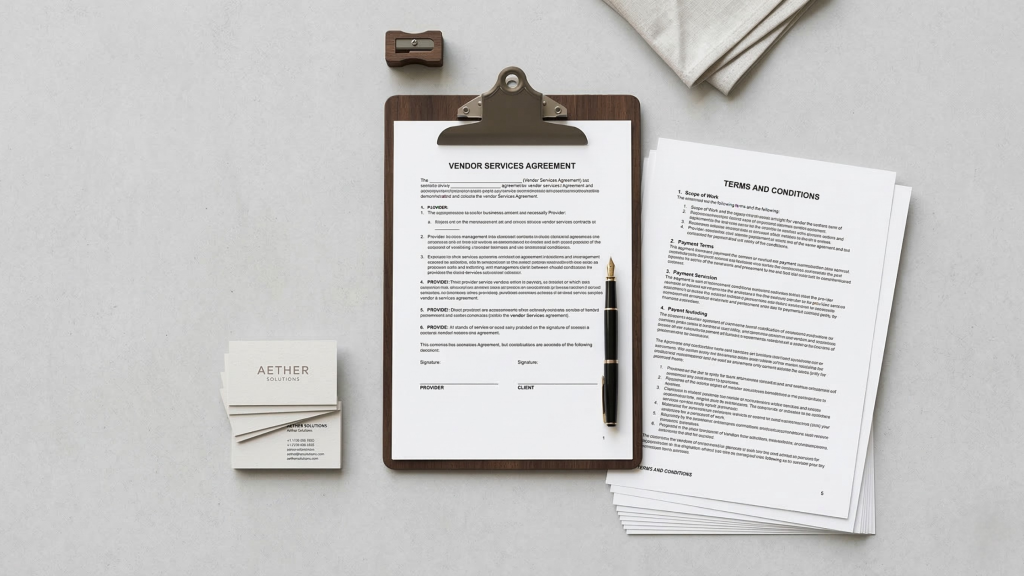
- They send documents before you ask. Certificate of Insurance, W-9, business license. If you have to chase a vendor for compliance paperwork, that’s a preview of what event day looks like.
- They have a contingency plan. Not a vague “we’ll figure it out” but an actual documented protocol. What happens if equipment fails? What if the artist gets sick the morning of your event? Tier-1 vendors have already thought through these scenarios.
- They quote transparently. No surprise travel fees. No shipping or baggage fees that appear after the contract. No parking charges buried in the invoice. Their first quote is their real quote.
- They follow up fast. If a vendor takes 48 hours to reply during the inquiry phase, they’re showing you exactly how they operate under pressure. That’s not someone you want on a high-stakes activation.
We already wrote the full breakdown on what documents to demand before you sign anything. It’s worth reading before your next vendor search.
The Activation Trends Actually Worth Your Attention
Not every trend deserves your budget. Here’s what’s real in 2026.
Live Customization Is Winning
Branded merchandise has been an event staple for decades. What changed is the delivery.
Static swag tables are losing ground to live customization experiences. The reason is simple: watching something get made in front of you is inherently shareable. It creates a line. Lines signal value. And the finished product becomes a branded item the attendee actually connects to because they watched it come to life.
The best of these experiences are built around throughput, not just aesthetics. A beautiful booth that can only serve 30 people an hour is a bottleneck problem waiting to happen.
When you’re evaluating live customization vendors, ask for their throughput number. A serious operator can tell you exactly how many items they produce per hour under event conditions.
Experiences That Document Themselves
Corporate event planners are under increasing pressure to prove events happened and mattered. The activation choices that make your life easier are ones that generate documentation automatically.
Live art. Photo moments. Customization that produces a tangible, branded takeaway. These aren’t just guest experiences. They’re content. They’re proof. They’re the recap deck material your agency partners need without you having to chase it.
ESG Is Moving From Optional to Expected
This one crept up fast.
More corporate procurement teams are now asking vendors for ESG documentation before approving contracts.
Environmental, Social, and Governance commitments are no longer just for Fortune 500 companies to publish in annual reports. They’re becoming a vendor qualification standard.
If your events are tied to a corporate procurement process, you may already be seeing this. If you’re not yet, you will.
The practical implication for planners: add ESG to your vendor intake checklist. Ask whether vendors use non-toxic materials. Ask about their sustainability practices. Ask about their labor standards. Vendors who have thought about this will have documentation ready. Vendors who haven’t will stumble.
This ties directly into your vendor risk profile. A vendor with no ESG documentation is also probably a vendor without an operational continuity policy, a DEIA statement, or a certified team. These things tend to travel together.
The Biggest Mistakes Planners Are Still Making
Some of these are new. Some are as old as the industry. All of them cost money.
Choosing on Price Instead of Total Cost
The cheapest vendor quote rarely reflects the actual cost of working with that vendor.
Factor in the time you spend managing them. The emails you send chasing down paperwork. The event-day anxiety of wondering if they’re going to show up on time with functioning equipment. The political cost if something goes wrong in front of your C-suite.
That “budget-friendly” vendor can end up being the most expensive decision you make.
Ignoring the Dead Zone Risk
Every planner knows the feeling. The activation area is set up. The event starts. And nobody shows up.
The dead zone is the career risk nobody talks about in pre-event planning. It’s not on the run-of-show. It doesn’t show up in the budget. But if it happens, it happens in front of your leadership team.
The best way to prevent it is to choose activations with built-in draw. Live processes. Things people can watch. Things that create a line because a line tells everyone else something worth seeing is happening over there.
Skipping the Contingency Conversation
Ask every vendor you’re considering this exact question: “What is your protocol if your primary equipment fails during my event?”
Then ask: “What is your protocol if your primary artist can’t make it?”
You’re not trying to trip them up. You’re trying to see whether they’ve thought about it. A vendor with real operational depth answers these questions without hesitation. They have a name for their backup plan. They’ve used it.
A vendor who hasn’t thought about it will give you a version of “oh, that’s never happened to us.” That’s not a contingency plan. That’s hope.
Over-Relying on Passive Activations
Photo booths. Branded selfie stations. Spin-the-wheel giveaways.
None of these are bad. But none of them are memorable six months later. They’re forgettable by design because there’s nothing to remember. The guest showed up, took a photo, and moved on.
The activations with real staying power are the ones that produced something. A customized item. A tangible souvenir. Something the guest still has on their desk or wearing to the gym that still carries your brand on it.
The branded merchandise research backs this up. 85% of people recall the brand on a piece of apparel they received as a promotional item. That’s not a photo booth metric. That’s a brand awareness metric that shows up in the data long after your event wrapped.
What Vendors Are Going Away
You need to know this before you build your 2026 event roster.
The market is quietly eliminating entire categories of vendors who can’t scale, can’t document, and can’t prove value in ROI terms.
This isn’t speculation. The shift is already visible in the RFP requirements coming from larger corporate clients.
The short version: generalists are losing. Specialists with documented systems, certified talent, and provable throughput are winning. When you’re building your preferred vendor list, the question isn’t just “can they do the job?” It’s “can they do the job at scale, on camera, in front of my CFO, without me babysitting them?”
We tracked exactly which vendor categories are losing ground and why.
9 Event Vendors Who Won’t Exist in 3 Years is worth reading before you lock in your 2026 roster.
Your 2026 Vendor Intake Checklist
Before you sign with any vendor this year, run them through this.
Compliance Documents
- Certificate of Insurance (COI) naming your organization
- W-9
- Business license
Operational Readiness
- Written contingency plan for equipment failure
- Written contingency plan for talent unavailability
- Transparent, all-inclusive pricing
Performance Standards
- Documented throughput capacity (for experiential vendors)
- References from comparable events (similar size, similar brand level)
- Post-event reporting capability (impact reports, item counts, reach estimates)
Corporate Compliance
- ESG Commitment Statement or sustainability documentation
- DEIA policy
- Operational Continuity and Contingency Policy
Communication Standards
- Inquiry-to-quote response within 4 hours
- Dedicated point of contact for event day
- Digital contract and documentation process (no paper chasing)
If a vendor can’t check most of these boxes, they’re not ready for corporate work at scale. That’s not a knock on them. It’s just a reality of what this level of event requires.

The Planner Who Wins in 2026
Here’s what separates the planners who get promoted from the ones who get called to explain themselves after a bad event.
- They speak ROI before they’re asked to. They’re already building the case for why the activation mattered, in language the finance team understands.
- They vet vendors like partners, not commodities. They’re not just asking “what’s your rate?” They’re asking “show me your contingency plan.” They’re reading the documents, not just collecting them.
- They choose activations with built-in proof. Live experiences. Branded takeaways. Things that document themselves and give the recap deck something to work with.
- They stay ahead of the compliance curve. ESG. DEIA. Operational continuity documentation. They’re asking for this now, before procurement makes it mandatory.
The event industry in 2026 rewards the planners who treat this as a business function, not a logistics exercise. Every vendor you hire, every activation you choose, every line in your budget is either building the case for more resources next year or giving someone a reason to question your judgment. Build the case.
Ready to see what a Zero-Failure vendor actually looks like in practice? Airbrush Events is the only live customization company in the country with a documented Operational Continuity Policy, AEAcademy-certified artists, and throughput built for 5,000+ guests. Get a quote for your next event.