
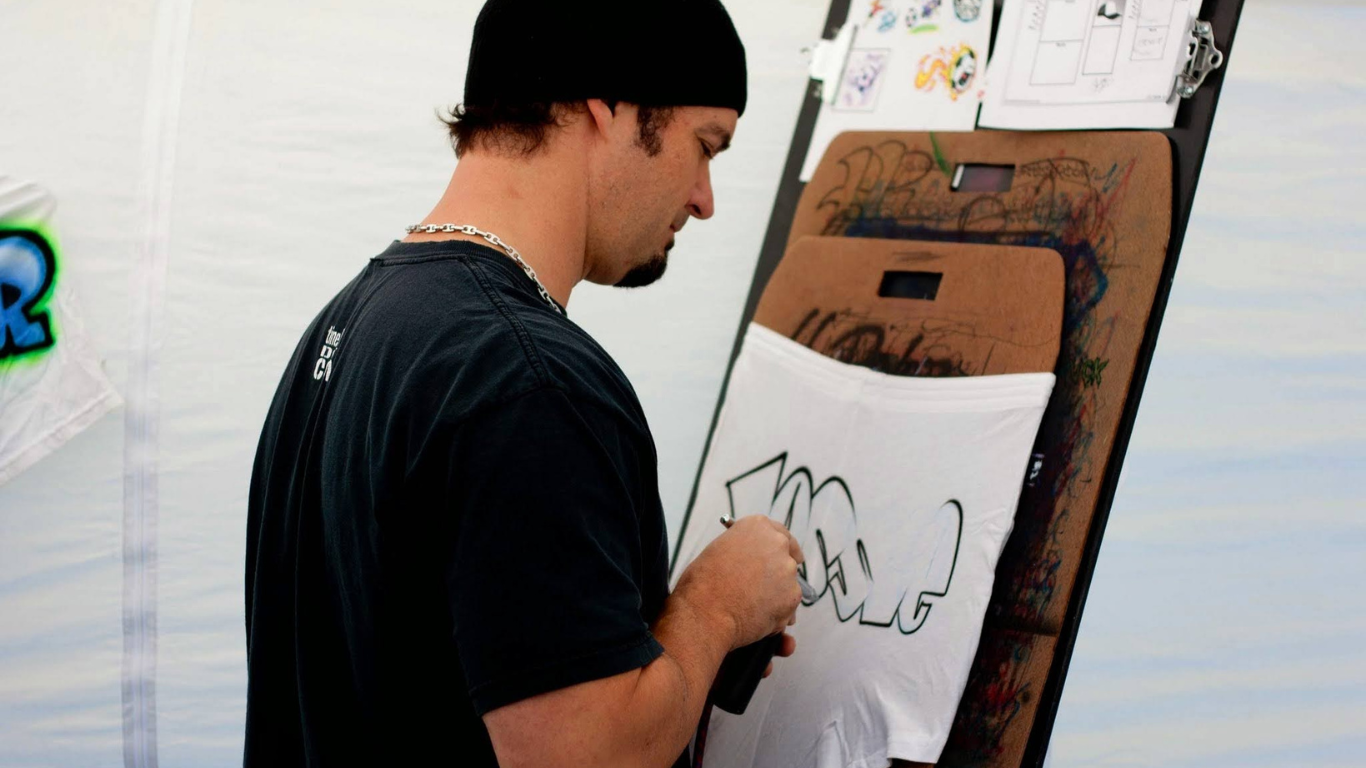
Discover the world of “T-Shirt Airbrushing Essentials” and embark on a creative journey that combines art and fashion. Pete Marin, the founder of Airbrush Events, shares his insights into the essential tools and techniques needed for anyone interested in learning this vibrant art form.
Pete Marin’s Inspirational Start in T-Shirt Airbrushing Essentials
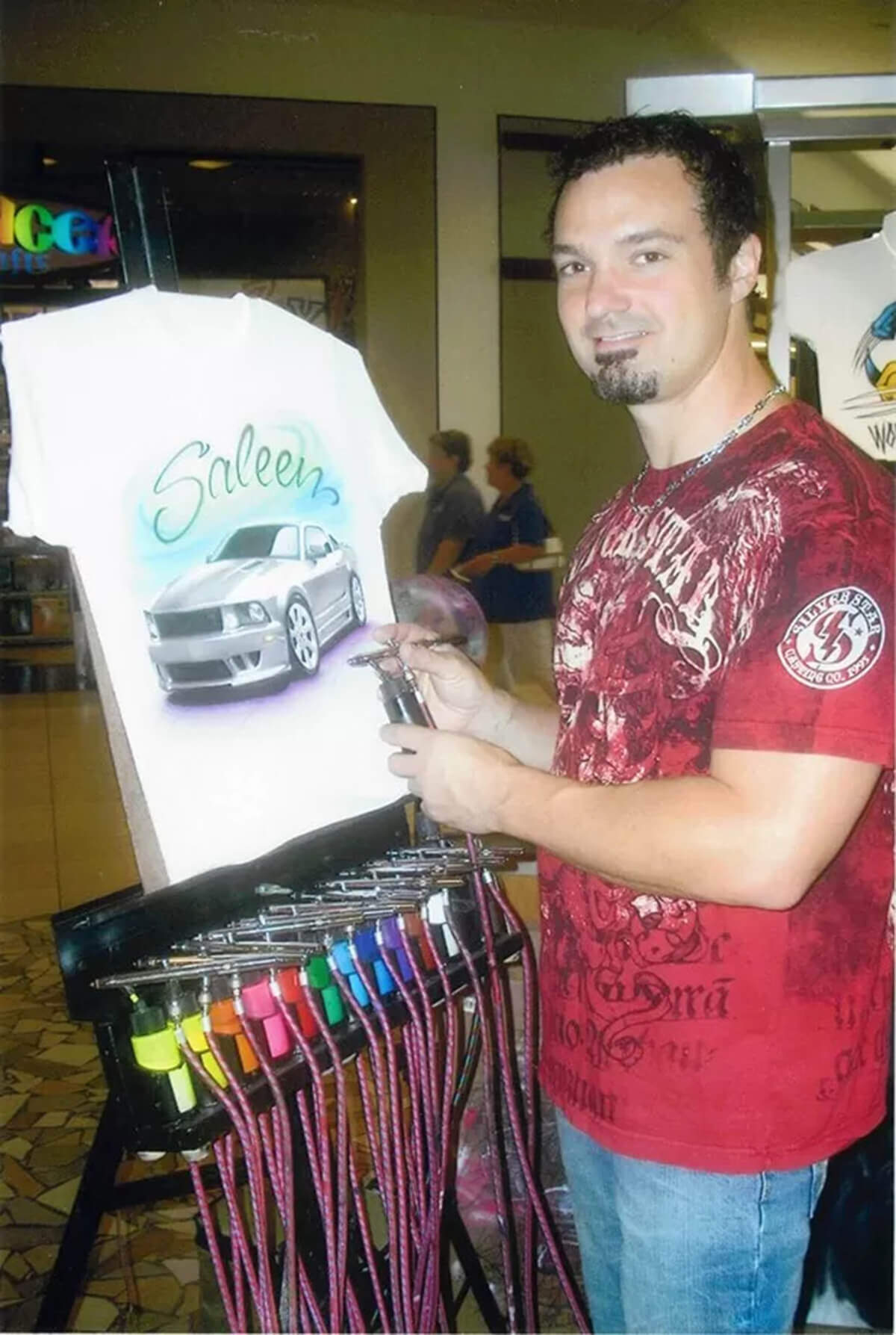
Pete’s journey into the realm of t-shirt airbrushing began in a Maine mall when he was just 20 years old. Drawn to the artistry of an airbrush kiosk, Pete’s enthusiasm led him to seek mentorship from the kiosk owner.
His commitment was tested through a unique training arrangement, emphasizing the importance of dedication in mastering t-shirt airbrushing essentials.
Navigating the Changing Landscape of Airbrush Art
The path to learning t-shirt airbrushing is different today than it was 30 years ago. While mentorship opportunities like Pete’s are rare, the resurgence of airbrush art has made resources more accessible. Aspiring artists now often turn to self-teaching methods and online tutorials, emphasizing the need for a clear understanding of the t-shirt airbrushing essentials.
Key Components of T-Shirt Airbrushing Essentials
- Air Compressor: A foundational tool for any airbrush artist is the air compressor. For t-shirt artistry, you’ll need a compressor that delivers at least 50 pounds of consistent air pressure.
While high-end, silent airbrush compressors are available, they can be expensive. A practical alternative is a hobby or nail gun compressor, typically costing between $150 and $200. These are more affordable and sufficient for starters, though they might be noisier.
At Airbrush Events, we’ve been using the Senco PC1010N compressor for over 10 years. It’s durable, light, and inexpensive. In 10 years, we’ve only had to throw one of these away. They are a considerable value overall.
- Quality Airbrush: Selecting the right airbrush is crucial for achieving the desired results in your art. While spending more on an airbrush doesn’t always guarantee better outcomes, it’s important to choose one that aligns with your specific painting needs.
For t-shirt airbrushing, an industry standard like the Iwata HP-BCS Eclipse Siphon Feed Airbrush is highly recommended. Priced at around $120, the Eclipse offers the perfect balance of quality and affordability for this specific art form. Opting for a mid-range airbrush like the Eclipse ensures that you’re equipped with a tool that’s tailored to the unique demands of t-shirt art, setting you up for success right from the start. - Exploring the Used Market: A practical tip for beginners is to explore slightly used airbrush guns on platforms like Facebook Marketplace or Craigslist. Many artists sell their barely used equipment, offering a cost-effective entry into t-shirt airbrushing essentials.
- Airbrush Hose: Along with the airbrush, you’ll need an airbrush hose, typically priced around $10. Ensure that the hose is compatible with both the compressor and the airbrush you choose. Airbrush hoses come in brand-specific variants, and fittings might vary.
- Paints and Bottles: Specific airbrush paints are necessary for t-shirt artistry. Along with the paints, invest in at least one bottle to hold the paint. This bottle attaches to the airbrush, feeding the paint into it.
- Substrate for Practice: Initially, your focus should be on honing your skills rather than creating finished pieces. Use newspaper, cardboard, scrap paper, or fabric for practice. This approach allows you to perfect your strokes and improve hand-eye coordination without the pressure of producing a presentable piece.
- Fittings and Quick Disconnect: The airbrush setup requires fittings that connect the hose to both the airbrush and the compressor. Additionally, a quick disconnect feature on the compressor facilitates easy connection and removal of the hose.
- Venturi Effect Knowledge: Understanding the Venturi effect, a principle that allows the airbrush to draw paint from the bottle, can be beneficial. While not immediately crucial, this knowledge can deepen your understanding of how airbrush equipment functions.
Embarking on Your T-Shirt Airbrushing Journey
As you gather these t-shirt airbrushing essentials and start practicing, remember Pete’s story. His transition from a curious observer to a proficient artist underscores the importance of perseverance and commitment. With the right mindset and the essential tools for t-shirt airbrushing, you too can embark on this rewarding artistic path.
Whether you’re exploring the used market for your first airbrush gun or practicing your first strokes on scrap fabric, each step brings you closer to mastering the art of t-shirt airbrushing. Keep focused, stay dedicated, and let your creativity flow as you delve into the world of t-shirt airbrushing essentials.
